

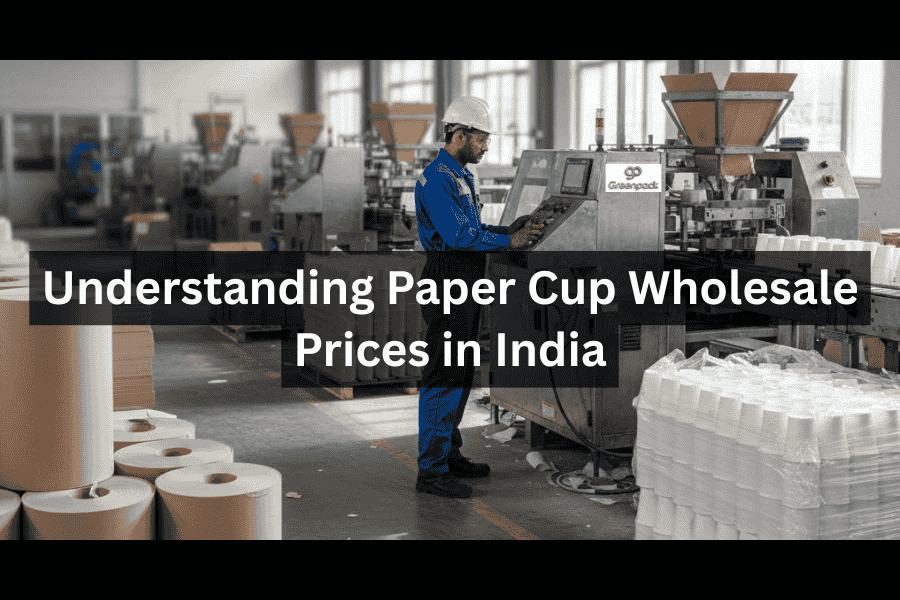
After years establishing and scaling a biodegradable packaging enterprise across three distinct manufacturing units (specifically in Noida, Ahmedabad, and Varanasi), we can confidently state that pricing for paper cups in India is a function of precise manufacturing principles, raw-material supply-side economics, and production scale. It is not a guess work.
Today’s B2B procurement professionals whether in QSRs, corporate dining, cafés, cloud kitchens, or catering face a constant push to minimize expenses while upholding green commitments. As government policy and public opinion rapidly shift away from single-use plastics, the need for paper cups, trays, lids, and other takeout items has grown. This market growth is good, but it also makes prices very unstable.
This analysis will clearly break down the true drivers of cost, drawing directly from the production realities we manage daily. This knowledge is important for smart sourcing and effective negotiation.
The Pulse of the Market: Why Indian Paper Cup Demand is Soaring
The shift towards environmentally friendly packaging in India is now definitive. Regulatory changes, a growing national awareness of environmental issues, and the massive growth in on-the-go consumption have cemented biodegradable paper cups as the default choice.
Tea and coffee consumption is still the main reason for the demand for hot and cold beverage cups but the rapid growth of quick-service restaurants and the booming food delivery industry have made the need for these cups much greater. This momentum keeps the supply chain moving, but it also makes it very sensitive to changes in the cost of raw materials and new barrier-coating innovations.
Unpacking the Cost: Five Core Variables Dictating Wholesale Pricing
As a manufacturer, we’ve found five non-negotiable variables that affect the final price per cup when you buy in bulk. Mastery of these points allows you to optimize your purchasing strategy.
- Paper Type and Density (GSM)
The paperboard material itself is the single largest expense.
- 300+ GSM: This thicker, higher-quality board is needed for larger volumes and hot liquids as it insulates better.
- 200–250 GSM: This is a more affordable choice that works best for smaller cups or cold drinks.
Manufacturer’s View: Choosing a higher GSM increases the cost, but provides better structural integrity, rigidity, and overall customer handling quality.
- Wall Configuration: Single, Double or Ripple Finish
The required level of thermal insulation sets the cup’s price tier.
- Single Wall Cups: The most budget-friendly option.
- Double Wall Cups: Eliminates the need for separate sleeves by providing natural insulation and heat retention.
- Ripple Wall Cups: Offers the maximum grip and thermal barrier, placing it at the highest price point.
Many cafes and QSRs choose the premium walls because the customer’s tactile experience is a crucial branding element.
- Inner Barrier: Standard PE vs. Sustainable Options (PLA / Aqueous)
The coating needed to stop leaks is where sustainability and production costs intersect.
- PE (Polyethylene) Coating: This is the cheapest and most common barrier but it makes it harder to recycle.
- PLA (Polylactic Acid) / Water-Based Coatings: These compostable or water-based options are better for the environment but they cost more to make because they need more precise calibration on the production lines.
Despite the marginal increase in cost, industry momentum is strongly favoring PLA and water-based coatings as sustainable technology evolves.
- Order Volume: The Ultimate Price Reducer
If we could provide bulk buyers one piece of advice it would be this: the quantity of items you order significantly affects the price of individual items.
Massive Volumes (500,000+ units): This achieves the lowest per-piece price due to optimized material utilization and the efficiency of continuous machine runs.
Low Minimum Order Quantities (MOQs): These incur higher costs because fixed expenses like machine setup time and labor are spread over fewer units.
This principle explains the consistent preferential pricing attained by national QSR chains.
- Custom Graphics and Branding Requirements
The complexity of your design directly influences the manufacturing rate card.
- Plain White: The lowest base cost.
- Single-Colour Logo: A marginal price increase.
- Full-Colour, Full-Wrap Graphics: The most expensive option, driven by the cost of printing plates, greater ink usage, and print coverage area.
A simple, clean, single-colour design is often the perfect balance of budget efficiency, strong aesthetics, and brand recognition.
Maximizing Savings: Why You Must Purchase Directly from the Factory
It is a known fact that involving middlemen (traders or distributors) adds unnecessary margin layers to your final pricing structure.
By establishing a direct relationship with a manufacturer like us, you benefit from:
- Base Pricing: Accessing the core manufacturing cost without distributor markups.
- Design Influence: Direct control over important details like GSM, coating material, and how the design is carried out.
- Quality Assurance: Full transparency in quality control, from sourcing the paper to the last step of packaging.
- Negotiation Leverage: Enhanced ability to get better terms, especially on big, long-term supply agreements.
- Sustainability Partnership: Working with a partner who has deep, hands-on knowledge of biodegradable tableware and using sustainable materials.
For businesses focused on sustained growth and large-scale sustainability initiatives, direct procurement is the only rational approach.
Negotiation Strategies: Actionable Founder Tips
- Be Transparent About Annual Commitment: We plan our production around the volumes we have promised. The best way to get better pricing models is to make a clear, big annual commitment.
- Rationalize GSM: 300 GSM is an adequate quality in a lot of cases. Moving away from 350 GSM when it’s not needed can save a lot of money.
- Simplify Your Branding: Choosing a simple design, like a logo with just one color, can cut printing costs by 20% to 30%.
- Inquire About Green Incentives: Ask if your supplier can offer special pricing for PLA or aqueous coatings, as these might be eligible for internal subsidies or specialized bulk rates.
- Calculate Your Total Landed Cost: Compare ‘Ex-Works’ (where you manage transport) against ‘Delivered-at-Place’ pricing to see which logistics model is cheapest for your specific location.
GreenPack’s Promise: Accessible and Cost-Effective Sustainability
GreenPack India’s business model is based on standing out by vertically integrating, running multiple plants, and processing raw materials in-house. This structure allows us to provide:
- Factory-Direct Pricing: You get the best deals on your bulk orders.
- Comprehensive Eco-Offerings: compostable paper cups, bowls, lids, and biodegradable tableware.
- Cost Clarity: Prices are transparent and broken down by GSM, coating choice, and print specifications.
- Reliable Supply: Our network of production sites lets us fulfill orders more quickly.
- Customization at Scale: Controlled MOQs tailored for business growth.
Our main goal is simple: to ensure that every business in India can get high-quality eco-friendly packaging that is also affordable.
Conclusion: Informed Sourcing for Maximum Value
In the Indian market, the price of paper cups is dynamically determined by size, material quality (GSM), the barrier coating used, print complexity, and the total quantity ordered. B2B buyers who grasp this manufacturing logic will secure favorable pricing while enhancing the customer experience.
The best thing you can do is bypass the distribution chain and work directly with a well-known manufacturer who can handle large orders, make high-quality products and is committed to making them in a way that is good for the environment.