

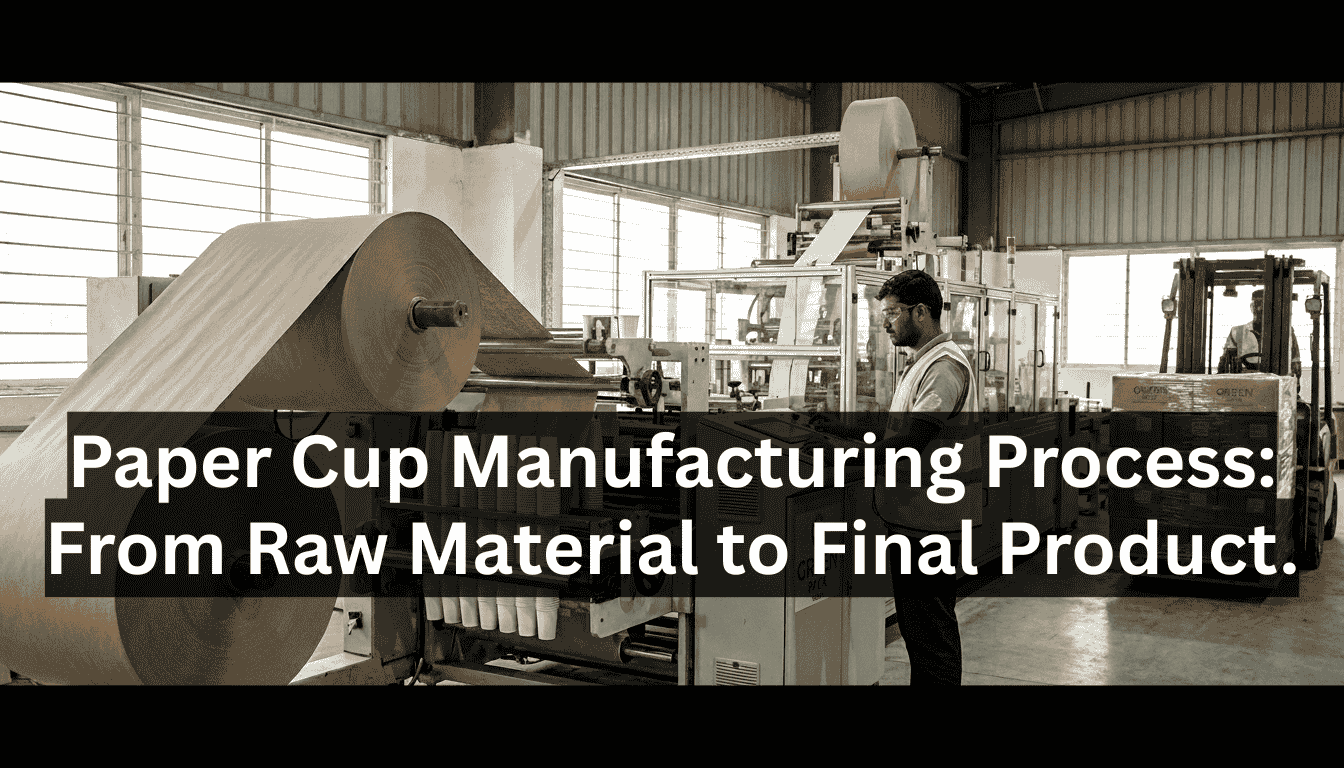
Paper cups can be found everywhere. From your morning coffee to a cool beverage, these basic containers significantly influence our everyday routines. It provides a practical, Sustainable, Eco-friendly packaging option. Numerous options are created as environmentally friendly food containers, a favoured selection for both businesses and consumers. Have you ever thought about how these cups are produced? This blog will guide you through an in-depth exploration of the production process. We will examine all aspects, from raw materials to the end product, emphasising our dedication to quality and openness. You will discover the processes that transform a roll of paper into a practical, and frequently biodegradable, paper cup, crucial for various restaurant packaging options.
Overview of Paper Cup Manufacturing
The manufacturing of a paper cup is an intriguing combination of accuracy and technology. It starts with large rolls of specially manufactured paper. This paper goes through several processes before turning into a strong cup. First, it is treated to make it water-resistant. Following that, elaborate designs are printed on the paper. After printing, the paper is cut into exact shapes for the cup’s body and bottom. The pieces are then moulded and sealed together using heat and pressure. This process ensures that each cup is both sturdy and leak-proof. Finally, the cups are submitted to rigorous quality control checks prior to packaging. Every day, millions of cups are produced using a simplified process that combines mechanical precision, chemical treatments, and advanced printing methods.
Raw Material Sourcing
Selecting the right materials helps in maintaining the quality of the paper cups. We carefully pick each material to ensure that the finished product meets high standards.
- Paperboard: Paperboard is the major material. It’s usually constructed of virgin wood pulp. The paperboard was chosen due to its strength, rigidity, and ability to retain shape. It should also be food-safe.
- Polyethylene (PE) coating: A thin layer of PE is added to the paperboard. The plastic lining waterproofs the cup and prevents leaks. It also protects the paper from moisture.
- Inks: All the printing machines use edible inks. These inks are safe to use with food and beverages. They are also intended to be colourful and long-lasting.
- Adhesives: Cup seams are sealed with special food-grade adhesives. These glues are strong and will keep the cup together without leaking.
Step-by-Step Paper Cup Manufacturing Process
The manufacturing process is a series of precise steps. Each step is important for creating a high-quality paper cup.
- Printing the Paperboard: Thick rolls of coated paperboard are passed through high-speed printing machines, which use edible inks to create unique graphics, logos, and branding. This stage gives the paper cup a distinct appearance and visual appeal.
- Die-Cutting the Blanks: After printing, the paperboard rolls are sent to a die-cutting machine. This machine cuts printed paper into particular shapes. These forms are known as “blanks” and serve as the cup’s side walls.
- PE Coating/Lamination: One or both sides of the paper blanks are coated with polyethylene (PE). This thin plastic layer forms a barrier. It keeps liquids from soaking into the paper.
- Cup Forming: The coated blanks are passed through automated cup-forming machines. These machines first form the bottom of the cup’s side wall into a cone. The edges are then cemented with heat.
- Bottom Punching and Sealing: A separate roll of PE-coated paper is used for the cup’s bottom. A punch creates round bottoms that are then sealed to the cone-shaped body. Heat and pressure form a robust, leak-proof seal.
- Rim Rolling: The cup’s top edge is rolled and curled. This results in a smooth and strong rim. The rim strengthens the cup and makes it more comfortable to sip from.
- Quality Control Checks: Strict quality inspections are conducted throughout the procedure. Cups are tested for leaks, proper sealing, print quality, and overall durability. Automated technologies and inspection workers ensure that each cup meets guidelines.
- Stacking and counting: Once the cups have been designed and examined, they are automatically stacked and counted. They are then transferred to the packing section, where it is wrapped in protective sleeves or sealed in cartons to ensure hygiene and avoid damage during shipment.
Packaging and Dispatch
Following the manufacturing process and quality tests, the paper cups are securely packed. It is initially placed in sleeves, then in cartons for protection during shipment and storage. Each carton is then sealed, labelled, and then it is ready to be delivered to clients. This economical packaging ensures that the cups arrive in pristine condition, ready for immediate use.
Conclusion
The journey of a paper cup from raw material to your hand exemplifies modern production techniques. It requires meticulous sourcing, accurate machinery and strict quality control. We are dedicated to producing sustainable food packaging that India can count on. Our method ensures that our biodegradable containers, paper cups, and lids are both useful and environmentally friendly. Understanding these procedures will provide you with insight into our commitment to quality and innovation. We strive to provide the best eco-friendly takeaway packaging, always with a focus on a greener future. Our production expertise ensures that our clients receive consistent, high-quality products that fit their different needs.
FAQs
What materials are used in paper cup manufacturing?
The key material used is paperboard from virgin wood pulp. It’s waterproofed by coating with polyethylene (PE). The remaining materials are food-grade inks and adhesives.
How are paper cups laminated?
Paper cups are made by laminating a thin layer of polyethylene onto the paperboard. This coating provides a barrier to liquid and moisture.
What quality checks are performed?
The checks include leak testing, seal integrity, print clarity, and dimensional accuracy. The standards for quality are high, supported by both automated systems and human inspections.
Are all the paper cups recyclable?
No, not all paper cups can be recycled in every place. Cups with a PE lining require special facilities to recycle. Biodegradable, or compostable, cups are designed for different disposal methods.
What makes Greenpack India’s process unique?
Greenpack India focuses on advanced automation, strict quality control in every stage and the use of sustainable food-grade raw materials that ensure a high-quality and eco-friendly product.
Greenpack India provides high-quality, environmentally friendly paper cup solutions that combine durability, precision, and sustainability. Whether you require custom designs or bulk manufacturing, our team is prepared to provide packaging that is consistent with your brand and environmental goals. Contact us today to request a price or learn more about our environmentally friendly paper cup solutions.